Introduction
introduction:-aging-gracefully-not-artificiallyBy Delight Dermatology Clinic, Seocho-gu, Gangnam, Seoul
It’s one of the most common questions we hear at Delight Dermatology Clinic: “How exactly do dermal fillers work?” Patients often know fillers can restore volume or enhance facial contours — but few understand the intricate science that makes these results look so natural.
Let’s unpack what really happens under your skin when a dermatologist uses dermal fillers, why some fillers last longer than others, and how artistry and science meet to achieve harmony — not heaviness — in facial rejuvenation.
The Aging Face: What We’re Really Treating
the-aging-face:-what-we're-really-treatingBy the time we reach our late 20s, collagen and elastin production begins to slow. Fat pads under the skin — especially around the cheeks, temples, and under-eyes — begin to shrink and descend. Bone resorption along the jawline and midface adds to the sense of sagging and hollowness.
In simple terms: we lose structure from the inside out.
Dermal fillers act like a precision scaffold, replenishing lost support and recreating the soft contours of youth. But unlike the static “fillers” of the past, today’s formulations are biologically active, integrating with your skin’s natural matrix to deliver hydration, lift, and elasticity.
What Are Dermal Fillers Made Of?
what-are-dermal-fillers-made-ofMost modern fillers used in Korea and globally are based on hyaluronic acid (HA) — a naturally occurring sugar molecule found in the skin, joints, and eyes. Hyaluronic acid binds up to 1,000 times its weight in water, which is why it gives skin that supple, dewy “glass skin” texture many patients desire.
However, not all HA fillers are the same. Through a process called crosslinking, the HA molecules are bonded to form a stable gel that resists early degradation.
Lightly crosslinked fillers (e.g., for tear troughs or fine lines) are soft and spreadable, designed to blend seamlessly into delicate skin areas.
Heavily crosslinked fillers (e.g., for jawline or cheek augmentation) are firmer and provide more lift and structure.
Beyond HA, there are biostimulatory fillers like calcium hydroxylapatite (CaHA) and poly-L-lactic acid (PLLA). Instead of simply adding volume, these stimulate your body to produce new collagen over time — ideal for patients seeking long-term rejuvenation rather than immediate fullness.
At Delight Dermatology Clinic, we often blend these technologies in customized programs — for example, combining subtle HA hydration with collagen-boosting treatments for natural, enduring results.
How Fillers Work Beneath the Surface
how-fillers-work-beneath-the-surface
Imagine your skin as a luxurious fabric stretched over a frame. With age, the frame weakens, and the fabric loses elasticity.
Dermal fillers strengthen that framework from below — carefully restoring balance to the face.
When injected correctly into specific anatomical layers — deep fat compartments, periosteum (bone surface), or the superficial dermis — fillers provide three core actions:
Volume Restoration – Replacing lost fat and structural support in areas like cheeks, temples, and under-eyes.
Hydration and Glow – HA attracts water, improving skin turgor and radiance.
Collagen Stimulation – Certain fillers activate fibroblasts, encouraging the skin to rebuild its own support matrix.
It’s not just about “filling.” It’s about guiding your skin to behave as it did years earlier — hydrated, resilient, and plump.
Why the Injector’s Skill Matters More Than the Product
why-the-injector's-skill-matters-more-than-the-productTo be honest, one of the most common misconceptions in Gangnam’s beauty culture is that results depend solely on the filler brand. Patients often ask, “Which filler do you use — Juvederm? Restylane? Yvoire?”
But in truth, the technique, placement, and aesthetic judgment of the injector make far greater difference than the label.
At Delight Dermatology Clinic, our philosophy follows
precision over volume.
Dr. Yun Sang Youl, a Mayo Clinic-trained dermatologist, emphasizes a 3D mapping approach before each procedure — studying how light, muscle movement, and soft tissue interact in the individual’s face. This ensures that the filler doesn’t just add size, but restores harmony.
Think of it as sculpting light and shadow — where every millimeter matters.
The Biochemical Journey: What Happens After Injection
the-biochemical-journey:-what-happens-after-injectionOnce injected, the HA filler integrates into your tissue, gradually binding water molecules to form a stable yet flexible cushion. Over weeks, your body accepts the material as part of its own matrix.
Over time (usually 6–18 months, depending on product type and metabolism), enzymes called hyaluronidases naturally break down the filler. This slow biodegradation explains why results fade gracefully rather than collapsing suddenly.
For collagen-stimulating fillers, the story is slightly different. Materials like CaHA or PLLA act as biostimulants — tiny signals that trigger your fibroblasts to produce new collagen. Even after the filler itself dissolves, your skin’s improved structure can last up to two years or more.
Are Fillers Safe?
are-fillers-safe
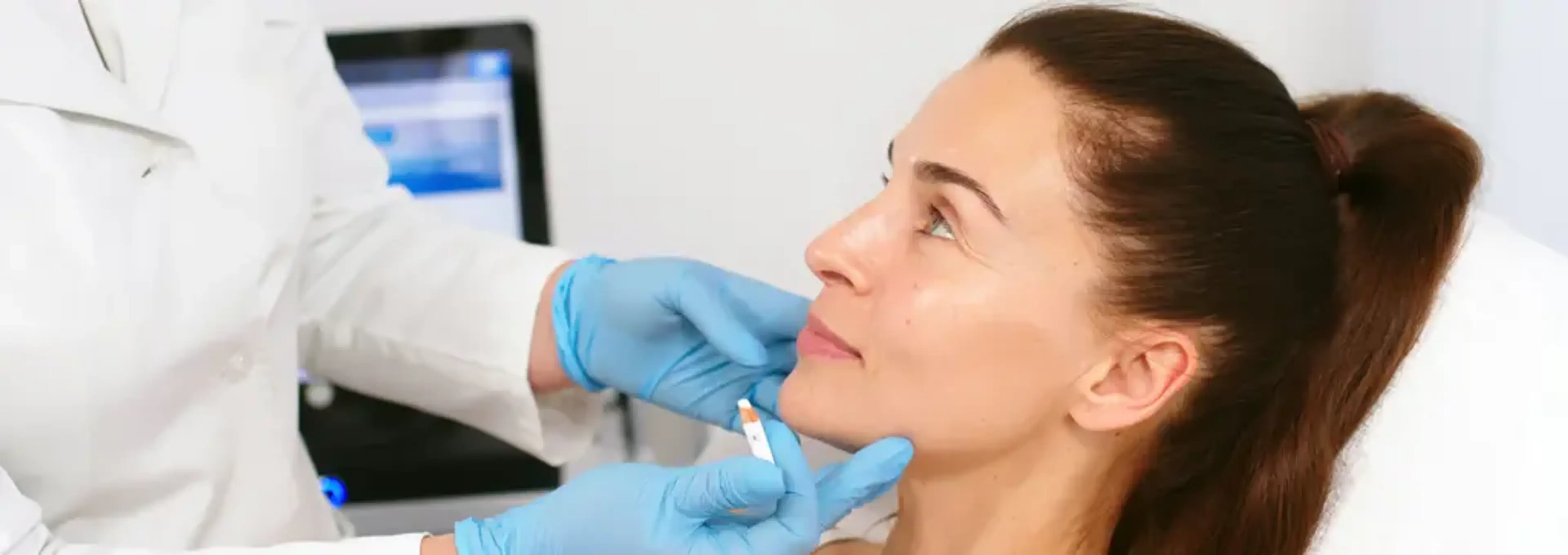
When performed by a board-certified dermatologist with anatomical expertise, dermal fillers are remarkably safe. However, improper injection techniques can lead to complications such as vascular occlusion or asymmetry.
That’s why at Delight Dermatology, all filler treatments are administered exclusively by dermatologists — never delegated to technicians — with pre-injection mapping using ultrasound guidance in complex cases. Safety, balance, and reversibility are always prioritized.
If needed, HA fillers can be safely dissolved with hyaluronidase, allowing precise corrections even after treatment.
Korean Aesthetic Philosophy: Subtlety Over Saturation
korean-aesthetic-philosophy:-subtlety-over-saturationIn Seoul’s aesthetic scene, especially in Gangnam, trends shift quickly — but one principle remains timeless: naturalness.
Rather than chasing exaggerated volume, modern Korean dermatology focuses on refinement — restoring vitality without obvious signs of intervention.
At Delight Dermatology Clinic, we believe the best filler work should be invisible in plain sight. Your friends should notice you look refreshed, not “done.”
This is why our doctors emphasize layered rejuvenation — small doses, placed strategically, often combined with treatments like Ulthera, Thermage, or skin boosters for holistic improvement.
Maintenance and Longevity: Why Aftercare Matters
maintenance-and-longevity:-why-aftercare-mattersWhat many patients overlook is that dermal fillers are not a “one-time miracle.” The filler material eventually breaks down, but the condition of your skin — its hydration, collagen content, and metabolic rate — affects how long results last.
For example:
Sun exposure and smoking accelerate filler degradation.
Consistent skincare and collagen-stimulating treatments extend results.
Regular touch-ups (every 12–18 months) help maintain balance, preventing sudden volume loss or uneven fading.
Think of it as maintaining a fine instrument — a little tuning keeps the harmony perfect.
Choosing the Right Clinic: What to Look For
choosing-the-right-clinic:-what-to-look-forIf you’re considering fillers in Seoul, look for:
A clinic led by dermatologists or plastic surgeons, not technicians.
Customized planning using facial analysis, not “template” procedures.
A focus on safety, reversibility, and aesthetic restraint.
Delight Dermatology Clinic in Seocho-gu embodies these standards, offering private, doctor-led filler programs tailored to your facial anatomy and aesthetic goals.
Final Thoughts
final-thoughtsDermal fillers are more than just beauty enhancers — they are precise, biologically active tools that restore harmony between structure, hydration, and light.
Understanding the science behind them allows you to make confident, informed choices — and appreciate that true rejuvenation lies not in overcorrection, but in restoration.
If you’re curious whether fillers are right for your face, consider a personalized consultation at
Delight Dermatology Clinic in Gangnam. Under the guidance of
Dr. Yun Sang Youl and
Dr. Shin Hui Young, you’ll receive not just treatment, but a thoughtful skin journey designed around longevity, safety, and natural elegance.